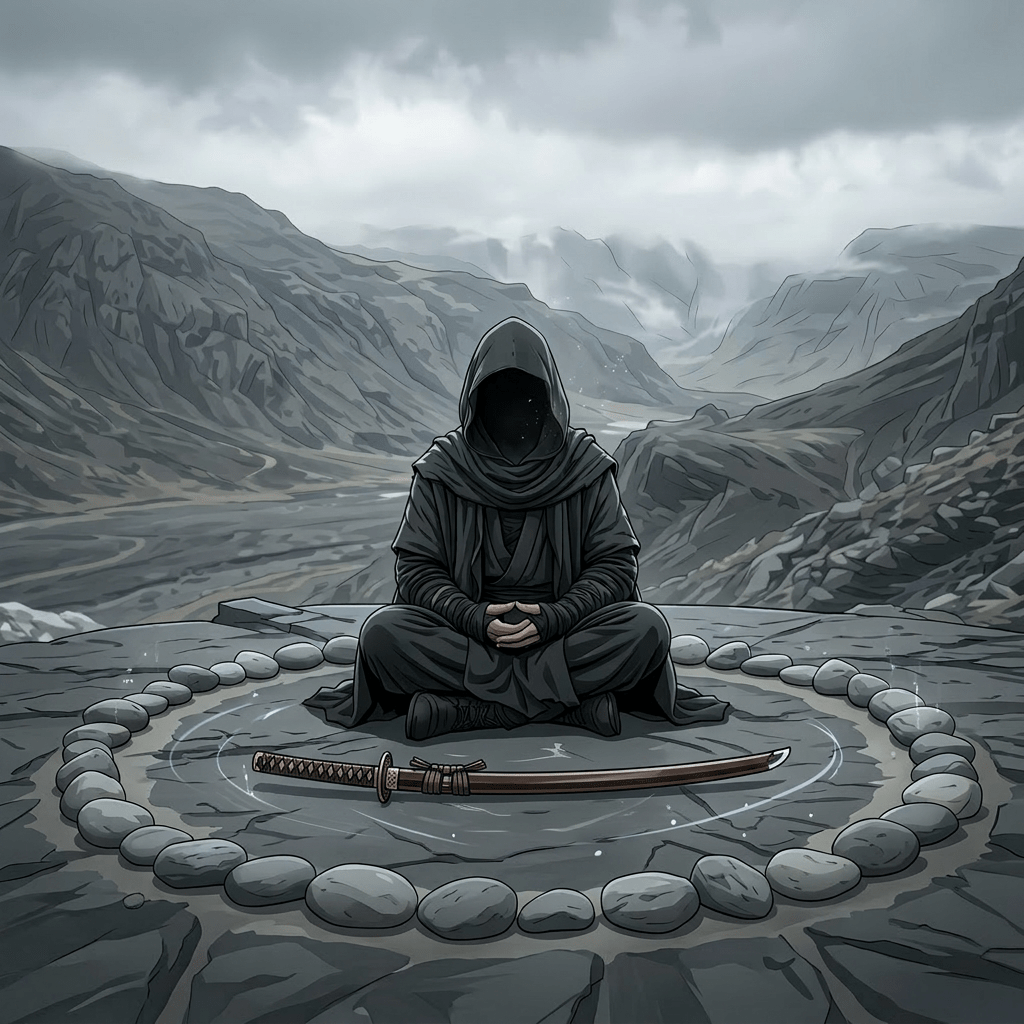
I do not fear my darkness. I respect it.
I have not conquered it, nor do I believe that is possible. I have accepted it as part of myself that was once necessary. A part forged through survival. A part born from fear, pain, violence, and protection. Pretending it does not exist would be dishonest. Pretending it made me evil would be even more dishonest.
I live somewhere in the grey. My darkness and my light were forged together.
There is darkness in all of us. Not the cinematic kind people quote online to sound dangerous or profound. I mean the real kind. The kind born in humiliation, abuse, abandonment, grief, violence, and survival. The kind that settles into the nervous system and waits beneath the surface until something threatens what we love.
Mine arrived early.
By the time I was ten years old, aggression already lived inside me like a second heartbeat. Physical abuse teaches a child strange lessons. It teaches you that safety is temporary. That weakness is dangerous. That softness gets punished. Eventually, the body adapts before the mind can. Something inside you wakes up and says: never again.
People speak about rage and anger as if they are the same thing. They are not.
Anger passes. Rage lingers.
Rage is what happens when pain has nowhere to go. It becomes survival energy. Tunnel vision. Tight muscles. A pulse that drowns out thought. It turns the body into a weapon before the mind has time to intervene.
For years, I hated that part of myself. Not just the violence. The existence of it.
I carried shame quietly. Constantly. Every relationship seemed to reinforce the same message beneath the surface: this part of you is dangerous. Broken. Unlovable.
So I tried to bury it.
That is what most people do with their darkness. They suppress it and pretend it no longer exists. But buried things do not disappear. They wait. They grow in silence.
You can see the consequences everywhere. People drink themselves numb trying to outrun what lives inside them. Others disappear into addiction, isolation, violence, distraction, depression, or self destruction. Some become hollow. Others become consumed by the very thing they tried to deny.
What you refuse to face will eventually control you.
The Army complicated everything. It took the parts of me that were forged through survival and gave them purpose. It sharpened them. Focused them into something efficient. Useful. Traits that once filled me with shame suddenly became valuable.
There is something tragic about that.
When aggression is born from survival and later rewarded by institutions, the line between adaptation and identity begins to blur. You stop asking whether the darkness is healthy because it works. And people praise what works. Especially in men. Especially in violent environments.
But usefulness is not healing.
That took me years to understand.
People often repeat the quote: “A harmless man is not a good man. A good man is a dangerous man who has it under voluntary control.”
Most misunderstand it because they romanticize the word dangerous. They imagine dominance. Power. Fearlessness.
But truly dangerous people usually understand violence better than anyone else. They know how quickly control disappears once the line is crossed. They know what rage feels like inside the body. They know violence leaves marks that never fully fade.
I regret every fight I have ever been in.
Not because I fear violence. Not because I lost. But because violence changes something inside you. Even when it feels justified. Even when you survive it. Even when you win.
Especially when you win.
There is no glory in becoming disconnected from your own humanity.
For a long time, I believed peace meant becoming less aggressive. Less intense. Less dangerous.
Now I think peace is awareness.
Peace is knowing exactly what exists inside you and choosing restraint anyway. Not because you are weak. Not because you are incapable. But because you understand consequences. Because you understand pain. Because you understand yourself.
There is a massive difference between being incapable of violence and consciously refusing it.
One is limitation. The other is discipline.
Healing taught me that.
It taught me that power without control is weakness pretending to be strength. Anyone can explode. Anyone can surrender to impulse. There is nothing admirable about losing yourself to rage.
Real strength is restraint. Real strength is remaining grounded while every nerve in your body demands war. Real strength is protecting without becoming consumed by destruction.
I did not learn that lesson all at once. Healing came slowly. Through therapy. Through writing. Through fatherhood. Through consequence. Through years spent examining the parts of myself I once wanted gone.
Little by little, I began to understand something important: the rage inside me was never born from evil. It was born from protection.
That realization changed everything.
Children do not create rage because they crave power. They create it because some part of them believes it is necessary for survival. Rage becomes armor. Hypervigilance becomes instinct. Aggression becomes safety.
The problem is that survival mechanisms do not disappear when the danger ends. They follow you into adulthood. Into relationships. Into fatherhood. Into ordinary moments that suddenly feel threatening for reasons you cannot explain.
Then one day you realize the thing that once protected you is now hurting you.
That realization can destroy a person. Or transform them.
For me, transformation began the moment I stopped viewing my darkness as proof that I was broken. Instead, I began seeing it as a wounded part of myself that had spent decades trying to keep me alive.
That does not excuse harmful behavior. Accountability still matters. Discipline still matters. Healing still requires responsibility.
But shame alone heals nothing.
Shame teaches people to hide. And hidden darkness becomes dangerous.
I think that is why I can connect with aggressive people in ways others sometimes cannot. I understand the language beneath the behavior. I understand what it means to live in a constant state of internal war. I understand what it feels like when the heat rises in your body before your thoughts can catch up.
More importantly, I understand that humiliation rarely calms aggression. It deepens it.
People calm down when they feel seen. Not excused. Seen.
There have been moments where I knew I could physically hurt someone if I chose to. Moments where old instincts surfaced instantly. But those moments taught me something important.
I no longer need violence to prove I am safe.
For people raised around violence, safety and dominance often become tangled together. You begin believing intimidation prevents pain. You believe control guarantees protection. You believe vulnerability invites danger.
Undoing that conditioning takes years. Sometimes decades.
And even then, the darkness never fully disappears.
The older I get, the more I realize my darkness and my light were never enemies. My aggression, protectiveness, compassion, discipline, rage, and restraint were all forged in the same fire. Separating them into “good” and “bad” was never honest.
The darkness inside me is not something I conquered. It is something I learned to understand.
And understanding changed everything.
I choose peace whenever peace is an option. Not because I am passive. Not because I fear conflict. But because I understand the cost of violence intimately enough to avoid it whenever possible.
But I also refuse to lie to myself.
If someone threatened my children or someone I deeply loved, I would become violent without hesitation. Not out of pride. Not out of ego. But because protection sometimes demands force. There are moments in life where danger is immediate and restraint becomes negligence.
People prefer simple morality. They want peaceful people to be harmless. They want violence to exist only inside monsters. But reality is more complicated than that.
The people most capable of controlled violence are often the ones who understand most deeply why it should be avoided.
There is a difference between a man who fantasizes about violence and a man who understands it well enough to keep it on a leash.
One is consumed by power. The other is responsible for it.
I do not glorify violence. I know what rage does to the human mind. I know how quickly hatred can deform a person from the inside out. I know how seductive anger becomes when it starts making you feel powerful instead of wounded.
But I also know this:
Self hatred is not healing.
Rejecting parts of yourself does not make you whole. It fractures you further. Real healing requires honesty. You must be willing to look directly at the parts of yourself you wish did not exist and somehow learn to love yourself anyway.
That may be the hardest part of healing.
Forgiveness.
Not forgiveness without accountability. But forgiveness for surviving the only way you knew how. Forgiveness for the younger version of yourself who built armor because nobody taught him another way to stay alive.
Little by little, I heal him.
Not by pretending he never existed. Not by destroying the darkness inside him. But by teaching him that he no longer has to carry it alone.
I think that is what peace actually is.
Not the absence of darkness.
But the absence of shame for having survived it.


Leave a Reply